The programs created for young people to learn promote essential development toward their future. Local authorities receive required guidance to support active youth involvement in education through development programs. The guidance clearly specifies the responsibilities which exist for youth education programs and employment. The guidelines define all responsibilities that pertain to youth education and workforce participation so that young people can obtain essential career and personal development support. This article is all about Role of Education in Youth Development and gives valuable information regarding the education sector.
Role of Local Authorities in Youth Education Programs
Local authorities must follow the requirements established by regulations in their interactions with education distribution and youth organizations.
The responsibilities include:
- The organization handles the planning and execution of teaching programs designed for 16 and 17-year-olds.
- Local authorities need to support youth participation through tracking their activities.
- Educative programs for youth need sufficient security to guarantee learning opportunities with quality standards.
These steps create effective conditions for young person education.
Ensuring Participation in Education and Youth Development
Local authorities need to fulfill certain duties in their efforts to improve educational participation by youth through the following requirements
- All youth must remain in education until they reach a specific age for educational progress.
- Local authorities need to provide assistance to teenage individuals who stay out of education and employment (NEET).
- Educational programs need to be sufficient enough and suitable to accommodate different learning requirements of teenagers.
Educational organizations consistently monitor and support young students to promote their participation in educational programs. A different method requires compelling evidence for its utilization.
Importance of Educating Our Youth
The path toward education and youth development incorporates strength through full adherence to statutory guidance. Education programs heavily prioritize preparing young students to spark better employment careers. Educational programs focused on youth allow people of young age to learn essential skills which helps them identify meaningful career paths. The educational paths for young people develop according to their youth program participation. Today’s right actions will create a secure and brighter future that awaits the following generation.
Key Strategies to Improve Education and Young People Participation
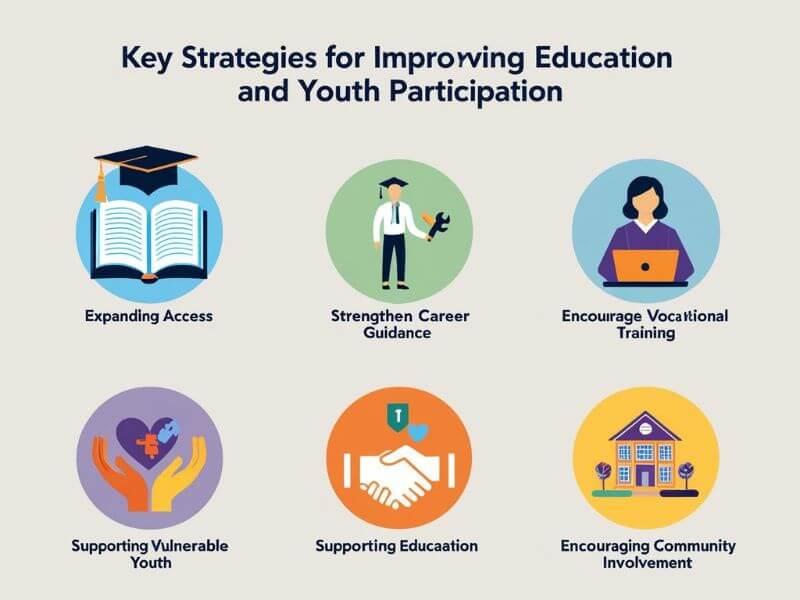
1. Expanding Access to Education
- Additional learning centers together with schools must establish programs for teenagers in distant locations.
- Educational resources through digital learning platforms along with online course access must be provided to students to increase their reach.
- Financial scholarships along with grants should be awarded to students who come from financially challenged households.
2. Strengthening Career Guidance and Counseling
- Young students need academic career counseling sessions at their educational institutions to review diverse professional opportunities.
- Industry professionals together with mentors should become available to deliver educational programs for youth guidance.
- Learning facilities which focus on self-development should be established to foster personal growth and ability in speaking.
3. Encouraging Vocational and Skill-Based Training
- Mainstream educational programs must incorporate vocational courses which let students experience real skills and abilities.
- The youth education programs should implement internship and apprenticeship programs that allow students to gain practical experience in the industry.
- Saturday workshops should introduce certification programs that focus on developing both technical abilities and entrepreneur knowledge and business administration know-how.
4. Supporting Vulnerable and NEET Youth
- Educational institutions should create specific programs to prevent academic dismissal of students who face potential dropout scenarios.
- Professional counselors along with therapists need to offer psychological and emotional support to students.
- A series of job placement resources should exist to assist NEET youth when they seek employment.
5. Encouraging Community and Parental Involvement
- The educational participation of their children would benefit from engaged parental involvement.
- Educational institutions need to partner with neighborhood organizations both to foster learning opportunities for young people along with education support.
- Educational volunteer initiatives need to be established to support mutual student teaching and learning experiences between peers.
Benefits of the Role of Education in Youth Development
Youth education investments produce enduring social advantages in combination with economic advantages.
Education programs for youth generate two main benefits alongside several others:
- Trained young individuals find improved prospects to secure professional positions.
- The education of workers leads to increased national development through economic development.
- The participation of students in learning activities decreases their tendency to engage in problematic activities.
- Young individuals obtain innovative concepts from their education which they contribute to society through creative thinking.
- Education fosters responsible citizenship and social awareness.
- Education of young people will lead to the development of an empowered and knowledgeable generation which ensures sustained development.
Conclusion
A person’s duty for education and their duty for employment and training serve as foundations for establishing a prosperous future. The process of education alongside training enables young individuals to build personal strength while driving social and economic prosperity in the country. Local authorities should maintain regular operations for education programs together with youth development activities even when NEET participants do not take part in education or employment. Solid youth education systems depend on the merger of digital learning programs with career guidance and vocational preparation as well as localized intervention methods. The focus on youth education will decrease unemployment rates and lower crime levels and economic instability. The Role of Education in Youth Development is crucial in equipping young individuals with the skills, knowledge, and opportunities needed for a successful future.
FAQ
1. What role does the active engagement of youth students serve for their education and training?
Young people need education to achieve personal breakthroughs and reach their professional goals. The education system helps young individuals build important life skills which opens better career prospects while supporting national social and economic growth.
2. Local authorities serve what purpose regarding youth education programs?
Local authorities maintain responsibility to provide quality learning and training opportunities to students in education. Local authorities conduct evaluation of youth participation while providing backing for vulnerable groups alongside advancing training methods focused on skills and professional abilities.
3. What programs exist to decrease the numbers of youth who fall into the NEET category?
Governments with organizations run youth educational programs that include career guidance along with monetary assistance and digital education platforms and vocational skills training and apprenticeship schemes.
4. What kind of assistance do families and their surroundings need to help education and youth development?
Community members together with parents should promote educational programs for teenagers and home-based learning activities as well as school activities and career-skill building initiatives for young people.
Source / Ref.: Gov.uk Contains public sector information licensed under Open Government Licence v3.0.
Written by [Ketan Borada / British Portal Team] – Founder of British Portal, dedicated to providing accurate and up-to-date information on UK public services and benefits.Related Posts
Previous Post
Next Post






- Business
 5
5 - Cricket5
- Department for Education49
- Departments3
- Driving and Transport
 53
53 - Education45
- Finance6
- Football13
- Golf3
- Government
 108
108 - Guides1
- Health
 5
5 - Health4
- International Politics9
- Law and Justice31
- Money and Tax23
- National Politics4
- News68
- Politics6
- Sports38
- Technology5
- Tennis3
- Transportation4
- Uncategorized4
- Visa
 17
17 - Visas and Immigration
 24
24 - Weather1