Personalised number plates are a popular way to add a unique touch to your vehicle. Whether you want to display your initials, a special date, or a custom phrase, these plates let you stand out on the road. In the UK, the DVLA (Driver and Vehicle Licensing Agency) manages the sale, transfer, and regulations of personalised plates. This guide covers everything you need to know, from purchasing and transferring plates to understanding legal requirements and selling them.
What Are Personalised Number Plates?
Personalised number plates are unique vehicle registration numbers that allow drivers to display customised characters instead of the standard-issue plates. These plates often feature initials, names, or meaningful combinations of letters and numbers, making vehicles stand out.
In the UK, DVLA personalised number plates are managed by the Driver and Vehicle Licensing Agency, which oversees their purchase, transfer, and registration.
These plates have become a popular choice for motorists seeking a personal touch. Whether you’re buying a private number plate as a gift, for branding purposes, or simply for fun, it adds a distinctive flair to your car.
However, personalised plates must still adhere to DVLA registration plate rules, including font, spacing, and display regulations.
How to Buy Personalised Number Plates in the UK
Purchasing personalised number plates in the UK is a straightforward process. The DVLA provides an official platform where you can buy number plates that are available for purchase. You can also purchase from private dealers or at auctions, where rare and sought-after private registration plates are often sold.
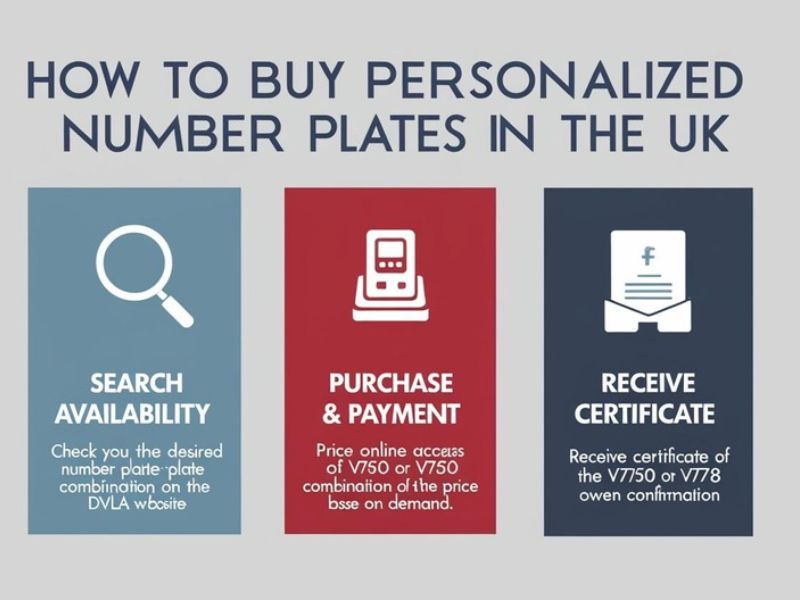
To buy a custom number plate, follow these steps:
- Search for Availability: Visit the DVLA website and search for your desired combination.
- Purchase and Payment: If the plate is available, you can buy it directly online. Prices vary depending on the uniqueness and demand for the private plate.
- Receive Your Certificate: Once purchased, you’ll receive a V750 or V778 certificate, confirming your ownership of the DVLA private number plate.
Many people also opt for custom licence plates from third-party retailers, but it’s essential to verify their legitimacy.
Check Availability: Enter Number you want
How to Transfer a Personalised Number Plate to Your Vehicle
Once you’ve purchased a personalised number plate, you’ll need to transfer it to your vehicle. The DVLA manages the transfer process, ensuring the new custom license plate is correctly linked to your car’s registration.
To transfer your custom number plate, follow these steps:
- Check Eligibility: Ensure your vehicle is registered with the DVLA and has valid road tax or a SORN (Statutory Off Road Notification).
- Apply for the Transfer: You can apply online through the DVLA website or by post using a V317 form.
- Receive Confirmation: Once the private plate is transferred, you’ll receive an updated logbook (V5C) confirming the new registration.
It’s important to correctly display your car number plates in line with DVLA registration plate regulations, including the proper font, size, and spacing. Failing to comply can result in fines or penalties.
How to Sell Private Number Plates in the UK
If you own a personalised number plate and wish to sell it, you can do so through the DVLA or private dealers. Many people sell their private reg plates to make a profit, especially if the combination is rare or desirable.
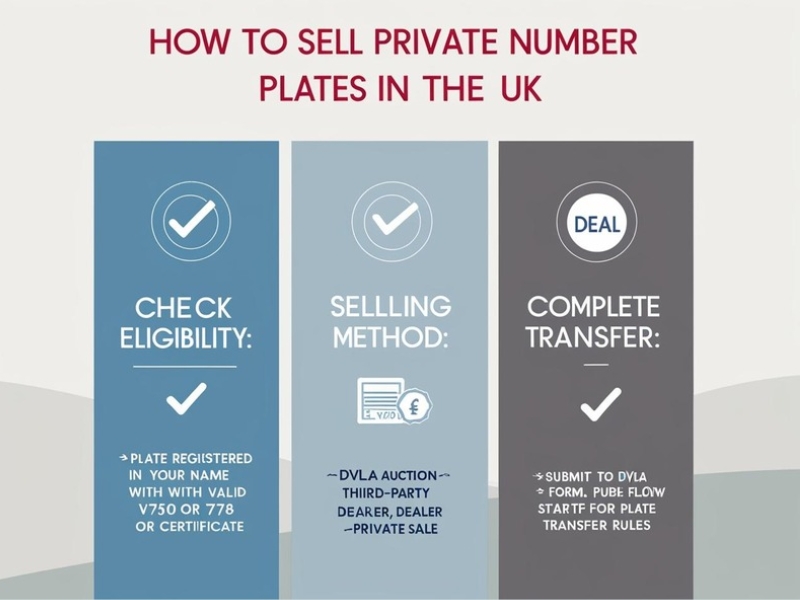
To sell your custom licence plate, follow these steps:
- Check the Plate’s Eligibility: Ensure the plate is registered in your name and has a valid V750 or V778 certificate.
- Choose a Selling Method: You can sell directly through the DVLA private number plates auction or list it with a third-party dealer. Alternatively, you can advertise it privately.
- Complete the Transfer: When you find a buyer, transfer the private registration plate by completing the relevant DVLA forms.
If you’re transferring the plate to another vehicle, the DVLA registration plate rules still apply. Ensure the display format complies with legal standards.
DVLA Rules and Regulations for Personalised Number Plates
And when purchasing or transferring personalised number plates, it’s essential to follow the DVLA rules to avoid fines or penalties. The DVLA registration plates must meet specific formatting and display standards.
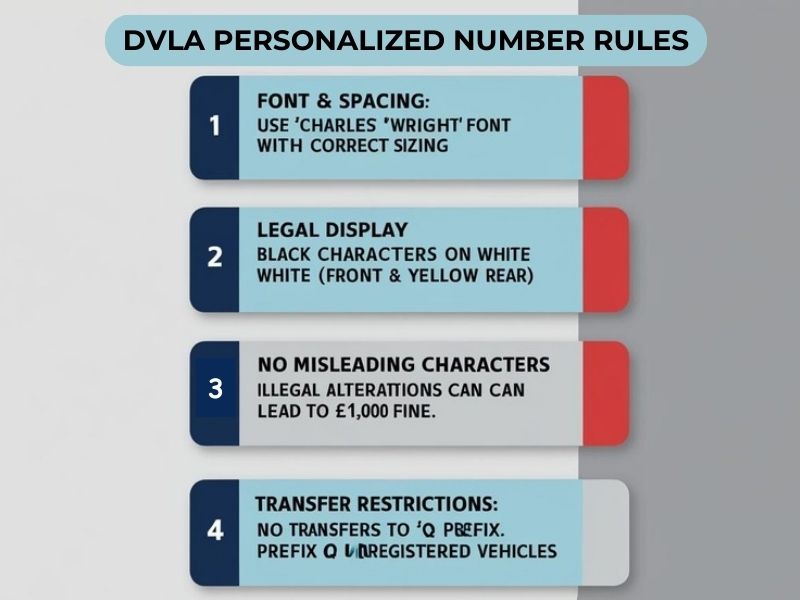
Key rules include:
- Font and Spacing: Car number plates must use the standard “Charles Wright” font, with correct spacing and sizing.
- Legal Display: The plates must have black characters on a white background (front) and yellow background (rear).
- No Misleading Characters: Altering or misrepresenting the characters on your custom number plate to create names or words is illegal and can lead to a fine of up to £1,000.
- Transfer Restrictions: You cannot transfer a plate to a vehicle registered with a “Q” prefix or one that isn’t DVLA registered.
Following these DVLA private number plate regulations ensures your vehicle stays compliant with UK laws.
Costs Involved in Buying and Transferring Number Plates
Next, the cost of personalised number plates in the UK varies based on factors such as demand, uniqueness, and seller pricing. The DVLA offers standard plates at fixed prices, while rare or desirable private number plates can fetch high prices in auctions.
Here’s a breakdown of typical costs:
- Standard DVLA Plates: Starting from £250, including VAT and the assignment fee.
- Private Sellers: Prices vary significantly, with some custom licence plates reaching tens of thousands of pounds.
- Transfer Fee: If you’re transferring a DVLA private number plate to another vehicle, you’ll pay a £80 transfer fee.
- Retention Fee: To keep a plate without assigning it to a vehicle, you’ll pay £25 per year.
When buying or transferring DVLA number plates, ensure you factor in these costs, including potential dealer fees.
How to Put a Private Plate on a Car
Once you’ve purchased a personalised number plate, you’ll need to assign it to your vehicle. The DVLA manages this process, ensuring the private plate is correctly linked to your car’s registration.
Follow these steps to put a custom number plate on your car:
- Apply Online or by Post: Visit the DVLA website or complete a V317 form by post. You’ll need the vehicle’s logbook (V5C) and the certificate of entitlement (V750) or retention document (V778).
- Receive Confirmation: The DVLA will confirm the assignment, and you’ll get an updated V5C showing the new private registration plate.
- Fit the New Plates: Replace the old plates with your car number plates, ensuring they meet DVLA registration plate regulations for font, size, and spacing.
After fitting the custom licence plates, inform your insurance provider of the change to avoid any issues with your policy.
Retaining a Custom Number Plate
Also, if you want to keep your personalised number plate without assigning it to a vehicle, you can place it on retention. This is useful when selling a car but keeping the private plate for future use.
Follow these steps to retain your custom number plate:
- Apply Online or by Post: Visit the DVLA website or complete a V317 form. You’ll need the vehicle’s logbook (V5C) and pay an £80 retention fee.
- Receive a Retention Document: The DVLA will issue a V778 retention document, allowing you to hold the private registration plate for up to 10 years.
- Reassign When Ready: When you’re ready to use the plate, you can reassign it to another vehicle by following the DVLA registration plate transfer process.
Keeping your DVLA private number plate on retention ensures you don’t lose ownership, even if you sell your car.
Benefits of Owning a Personalised Number Plate
Investing in a personalised number plate offers several advantages beyond just customising your vehicle. Many people see private number plates as a unique form of self-expression, while others view them as a potential investment.
Key benefits include:
- Uniqueness and Personalisation: Custom number plates allow you to showcase your initials, name, or a meaningful phrase, making your vehicle stand out.
- Potential Investment: Rare or desirable private reg plates can appreciate in value over time, making them a profitable asset.
- Branding and Recognition: Businesses often use custom licence plates for marketing, creating a memorable brand image.
- Easy to Remember: Car number plates with customised characters are often easier to recall, which can be helpful for fleet vehicles or promotional purposes.
Owning a DVLA private number plate adds a personal touch to your car while potentially offering long-term value.
Common Mistakes to Avoid
While buying, transferring, or selling personalised number plates, it’s important to avoid common pitfalls that can lead to fines or complications.
Key mistakes to avoid:
- Incorrect Display Format: Failing to follow DVLA registration plate rules for font, spacing, and alignment can result in fines of up to £1,000.
- Not Notifying Your Insurer: Forgetting to inform your insurance provider when adding a private plate to your vehicle may invalidate your coverage.
- Buying from Unverified Sellers: Purchasing personalized license plates from unlicensed dealers can lead to fraudulent transactions. Always buy from reputable sources like the DVLA or authorised retailers.
- Forgetting to Transfer the Plate: If you sell your vehicle without transferring your private reg plate, you may lose ownership rights.
Avoiding these errors ensures that your DVLA private number plate remains legally compliant and properly registered.
Tips for Choosing the Perfect Personalised Number Plate
Selecting the right personalised number plate involves more than just picking random characters—it requires creativity and strategy. Whether you want a private plate for personal use or investment purposes, these tips can help you choose wisely.
Key tips include:
- Keep It Simple and Memorable: Opt for custom licence plates that are easy to recall, such as initials, short words, or meaningful dates.
- Consider Future Value: Certain private reg plates with popular names or rare character combinations can appreciate in value, making them a smart investment.
- Check Legal Requirements: Ensure your car number plates comply with DVLA registration plate rules regarding font, spacing, and display format.
- Use Relevant Keywords: For business vehicles, consider custom number plates that reflect your brand name or services for better recognition.
- Budget Wisely: DVLA private number plates range from affordable to extremely expensive. Set a budget before exploring premium options.
Choosing a DVLA personalised number plate that is meaningful, legally compliant, and potentially valuable enhances both your vehicle’s style and its resale potential.
Owning a personalised number plate is a stylish way to add a unique touch to your vehicle, whether for personal expression or as a potential investment. By following the DVLA rules and using reliable platforms, you can easily buy, transfer, or sell your private reg plate without complications. Just remember to keep your car number plates legally compliant and notify your insurer after any transfer. With the right approach, your custom licence plate can be both a statement piece and a valuable asset.
Source / Ref.: Gov.uk Contains public sector information licensed under Open Government Licence v3.0.
Written by [Ketan Borada / British Portal Team] – Founder of British Portal, dedicated to providing accurate and up-to-date information on UK public services and benefits.Related Posts

Previous Post
Next Post




- Business
 5
5 - Cricket5
- Department for Education49
- Departments3
- Driving and Transport
 53
53 - Education45
- Finance6
- Football13
- Golf3
- Government
 108
108 - Guides1
- Health4
- Health
 5
5 - International Politics9
- Law and Justice31
- Money and Tax23
- National Politics4
- News68
- Politics6
- Sports38
- Technology5
- Tennis3
- Transportation4
- Uncategorized4
- Visa
 17
17 - Visas and Immigration
 24
24 - Weather1