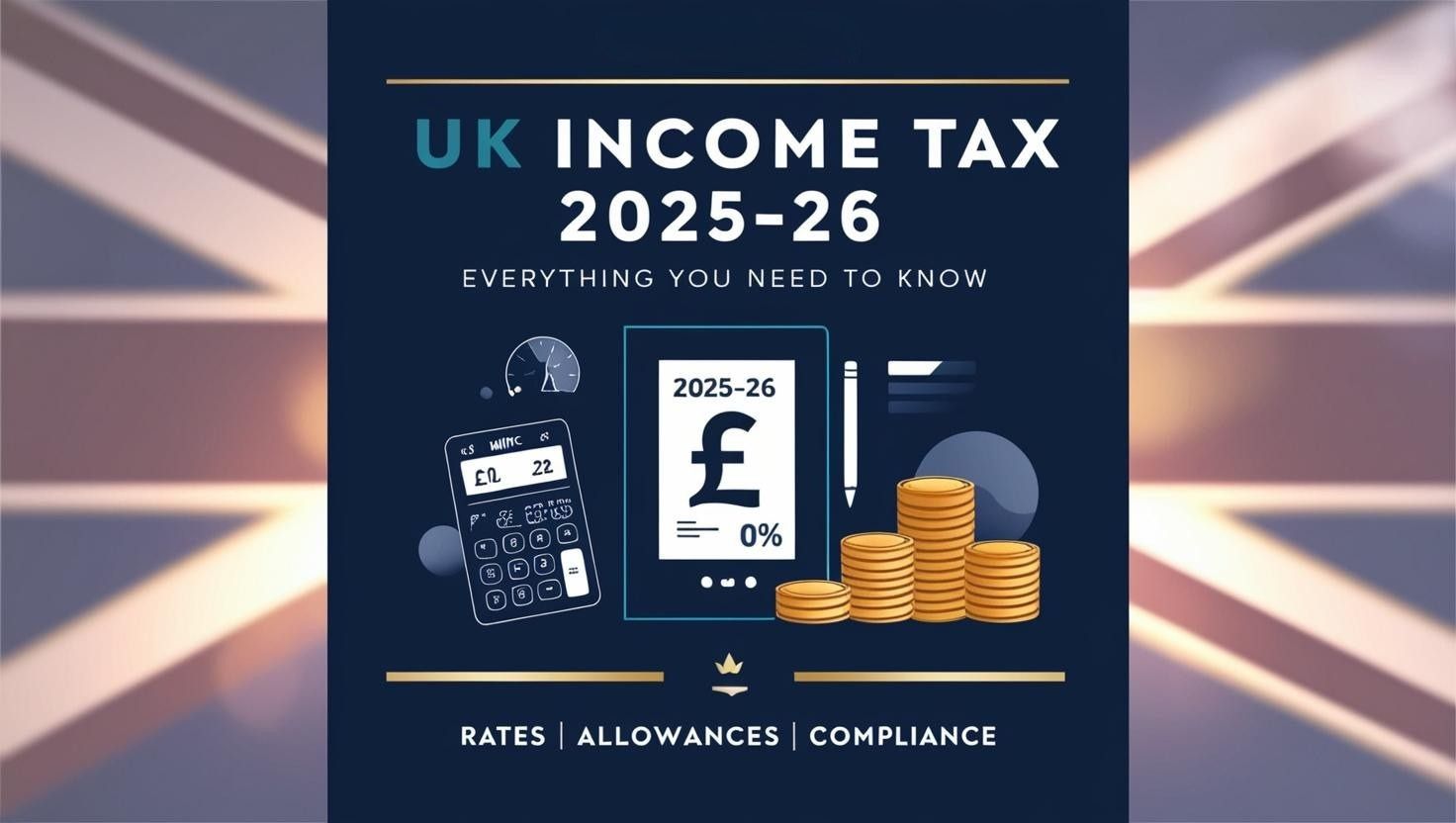
The UK tax system can seem complex, but understanding your income tax obligations is essential for financial planning and compliance. This blog provides the latest information on the UK income tax 2025-26 tax year, covering everything from tax rates and personal allowances to filing requirements and recent changes that will impact taxpayers from April 2025.
What is Income Tax in the UK?
Income tax is a tax levied by the UK government on personal income. It represents one of the government’s primary revenue sources, funding essential public services like healthcare, education, and infrastructure.
HM Revenue and Customs (HMRC) is responsible for collecting and managing income tax in the UK. Income tax applies to various income sources, including employment earnings, self-employment profits, rental income, pension payments, and investment returns.
Learn more about how HMRC operates and enforces tax compliance– HMRC in UK: Tax Made Simple
Most UK residents must pay income tax on their global income, while non-residents typically pay tax only on income earned within the UK. The amount you pay depends on your total income, available allowances, and the applicable tax rates for the current tax year.
UK Income Tax Rates and Bands for 2025-26
For the 2025-26 tax year, the UK government has maintained the income tax thresholds announced in previous years. The personal allowance will remain frozen at £12,570 until April 2028, after which it will resume increasing annually in line with inflation.
For England, Wales, and Northern Ireland:
The income tax rates and bands for the 2025-26 tax year are:
| Band | Taxable income | Tax rate |
| Personal Allowance | Up to £12,570 | 0% |
| Basic rate | £12,571 to £50,270 | 20% |
| Higher rate | £50,271 to £125,140 | 40% |
| Additional rate | over £125,140 | 45% |
It’s important to understand that these bands work progressively, meaning you only pay the higher rate of tax on income above each threshold. For example, if you earn £45,000 in the 2025-26 tax year, you’ll pay:
- No tax on the first £12,570
- 20% tax on the remaining £32,430
For Scotland:
Scotland has a different income tax structure with more bands than the rest of the UK:
| Taxable income | Scottish tax rate | |
| Personal Allowance | Up to £12,570 | 0% |
| Starter rate | £12,571 to £14,876 | 19% |
| Basic rate | £14,877 to £26,561 | 20% |
| Intermediate rate | £26,562 to £43,662 | 21% |
| Higher rate | £43,663 to £75,000 | 42% |
| Advanced rate | £75,001 to £125,140 | 45% |
| Top rate | over £125,140 | 48% |
The Advanced Rate was introduced at the start of the 2024/25 tax year and continues into 2025-26.
Personal Allowances and Tax-Free Income
The standard personal allowance for 2025-26 remains at £12,570, consistent with the previous year. This is the amount of income you can earn before paying any income tax.
However, this allowance is reduced for high earners. For those with income exceeding £100,000, the personal allowance decreases by £1 for every £2 of income above this threshold. Individuals earning £125,140 or more receive no personal allowance at all.
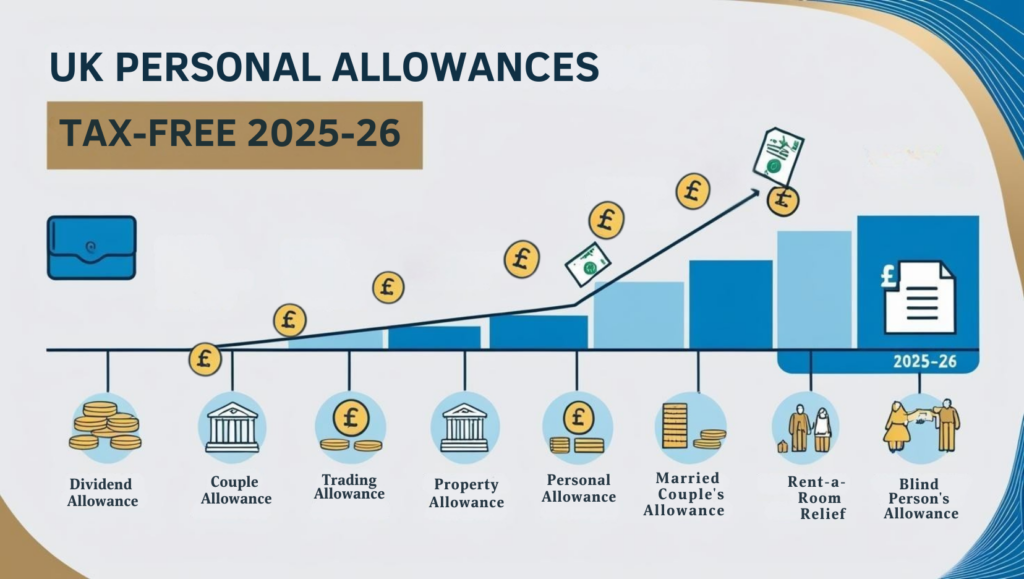
Additional tax-free allowances for 2025-26 include:
- Personal Savings Allowance: Basic rate taxpayers can earn £1,000 in savings interest tax-free, while higher rate taxpayers can earn £500
- Dividend Allowance: £500 for all taxpayers
- Property and Trading Allowances: £1,000 each
- Marriage Allowance: Allows transfer of £1,260 of unused personal allowance to a spouse or civil partner (provided neither pays tax at higher rates)
- Married Couple’s Allowance: Available if one spouse was born before April 6, 1935, at £11,270 (though restricted to relief at 10%)
- Rent-a-Room Relief: £7,500
- Blind Person’s Allowance: £3,130
How Income Tax is Collected – PAYE vs Self-Assessment
PAYE System
For most employees, income tax is collected through the Pay As You Earn (PAYE) system. Under PAYE, your employer deducts income tax and National Insurance directly from your salary before paying you.
The amount deducted depends on your tax code, which reflects your allowance and any adjustments. HMRC issues tax codes to ensure you pay the correct amount of tax throughout the year. It’s advisable to check your tax code regularly to ensure it’s correct and avoid overpaying or underpaying tax.
Self-Assessment System
Self-employed individuals, those with additional income sources, or those with complex tax affairs must file a Self-Assessment tax return.
If you’ve sold property, shares, or other assets, you may also need to report and pay Capital Gains Tax through Self-Assessment.
You may need to complete a Self-Assessment if you:
- Are self-employed or a partner in a business
- Have income from rental property
- Have significant investment income
- Have foreign income
- Need to claim certain tax reliefs
- Have income over £100,000
For the 2023/24 tax year, the deadline for filing Self-Assessment returns online and paying any tax due is January 31, 2025. The deadline for the 2024/25 tax year will be January 31, 2026.
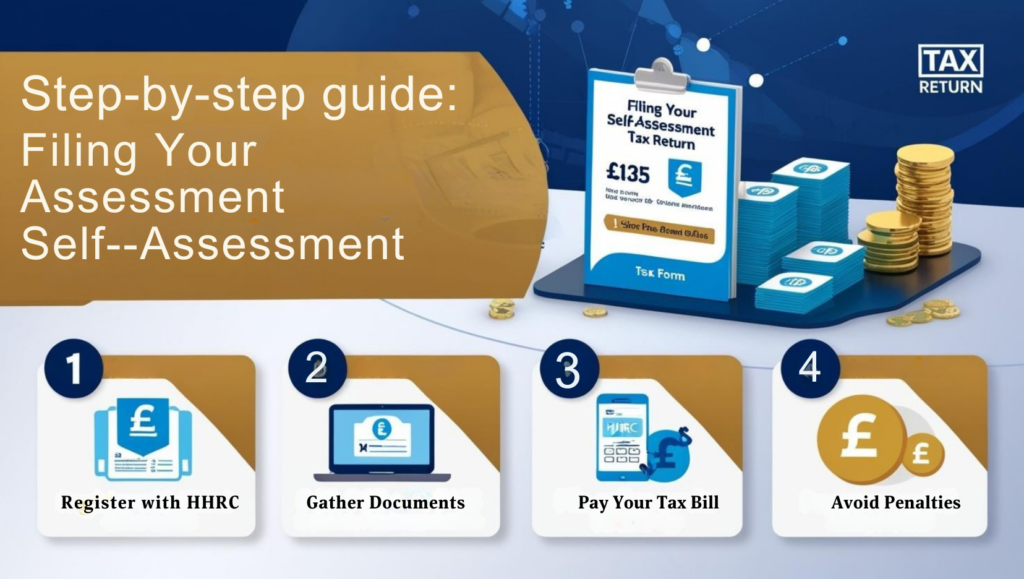
Step-by-Step Guide: Filing Your Self-Assessment For UK Income Tax
If you need to complete a Self-Assessment tax return, follow these steps:
Register with HMRC
If you’re filing for the first time, register with HMRC as soon as possible. The registration deadline for the 2024/25 tax year is October 5, 2025.
Gather necessary documents
Collect all relevant financial information, including:
- P60 (if employed)
- P45 (if you changed jobs)
- Bank statements
- Investment statements
- Records of expenses (for self-employed)
- Pension contributions
- Charitable donations
Complete and submit your return
You can file online through the HMRC website or via the HMRC app.
Pay your tax bill
For the 2023/24 tax year, payment is due by January 31, 2025.
Remember, missing the deadline results in an automatic £100 penalty, with additional penalties for further delays.
Deductions and Reliefs – Reduce Your Income Tax Bill
Various deductions and reliefs can legally reduce your tax liability:
For Employees:
- Pension contributions: Receive tax relief at your highest rate of income tax
- Charitable donations: Gift Aid adds 25% to your donation and may reduce your tax bill if you’re a higher or additional rate taxpayer
For Self-Employed:
- Allowable business expenses: Including office costs, travel expenses, staff costs, and business premises
- Capital allowances: For purchasing equipment and machinery
Investment Reliefs:
- Enterprise Investment Scheme (EIS): Up to £1,000,000 investment (or £2,000,000 for knowledge-intensive companies) with 30% income tax relief
- Seed Enterprise Investment Scheme (SEIS): Up to £200,000 investment with 50% income tax relief
- Venture Capital Trusts (VCT): Up to £200,000 investment
- Individual Savings Accounts (ISAs): Up to £20,000 can be invested tax-free
What Happens if You Pay Too Much or Too Little Tax?
If You’ve Overpaid
If you’ve paid too much tax, HMRC will notify you once they’ve processed your Self-Assessment return. You can check if you’re due a refund through the HMRC app after filing your return. HMRC typically processes refunds within a few weeks.
If You’ve Underpaid
If you’ve underpaid tax, HMRC will notify you of the amount owed. Depending on the circumstances, you may be able to spread payments or include the underpayment in your tax code for the following year. However, if tax debts pile up, understanding debt management and bankruptcy laws can be crucial.
Learn more about Debt Management in the UK
Understanding National Insurance Contributions (NIC) and Their Relationship to UK Income Tax
National Insurance Contributions are separate from income tax but are typically collected alongside it. NICs fund state benefits, including the State Pension, NHS, and unemployment benefits.
For the 2025-26 tax year, a significant change affects employers: from April 6, 2025, the National Insurance rate paid by employers will increase from 13.8% to 15%. This change is part of the UK government’s plan to raise £40 billion in taxes.
For self-employed individuals, the voluntary Class 2 NICs will be £3.50 weekly in 2025-26. The small profits threshold remains at £6,845 annually.
Changes and Updates for the Current Tax Year (2025-26)
Several key changes are taking effect for the 2025-26 tax year:
- Employer NICs increase: The rate rises from 13.8% to 15% from April 6, 2025
- Frozen thresholds: The personal allowance and income tax thresholds remain frozen until April 2028
- Domicile changes: From April 6, 2025, an individual’s liability to UK tax will no longer be determined by their domicile but will be based solely on their residence
- Employment allowance increase: The employment allowance per business increases to £10,500
- National Living Wage and National Minimum Wage Increases: Taking effect from April 2025
Useful Tools and Resources
To help manage your tax affairs effectively, HMRC provides several useful tools:
- Personal Tax Account: Access your tax details, check your tax code, and manage your Self-Assessment
- Tax Calculator: Estimate how much tax you’ll pay
- HMRC App: Check tax information, claim refunds, and track submissions
- Self-Assessment Helpline: Get direct assistance with tax returns
Takeaway
Understanding UK income tax is crucial for effective financial planning. With multiple changes coming into effect for the 2025-26 tax year, including the increase in employer National Insurance contributions and continued freezing of personal allowances, it’s more important than ever to stay informed.
Always ensure you’re utilizing all available allowances and reliefs to minimize your tax liability legally. When in doubt, consider seeking professional advice, especially if you have complex tax affairs.
For the latest updates on UK taxation, consider bookmarking the official HMRC website or subscribing to tax update newsletters. If your tax situation is complex, consulting with a qualified tax professional can help ensure compliance while maximizing available tax benefits.
Remember, proper tax planning should be a year-round activity, not just a concern when deadlines approach. By staying informed and proactive, you can navigate the UK tax system efficiently and with confidence.
FAQ’S
1. How do I check my tax code?
You can check your tax code on your payslip, P60, PAYE coding notice, or by logging into your personal tax account on the HMRC website.
2.When is the Self-Assessment deadline for the 2023/24 tax year?
January 31, 2025.
3. What happens if I miss the Self-Assessment deadline?
You’ll receive an automatic £100 penalty. Additional penalties apply for longer delays.
4. How do I notify HMRC if my income changes?
You can update your information through your tax account or by contacting HMRC directly.
5. Can I reduce my income tax legally?
Yes, through pension contributions, ISA investments, charitable donations, and utilizing available allowances and reliefs.
Source / Ref.: Gov.uk Contains public sector information licensed under Open Government Licence v3.0.
Written by [Ketan Borada / British Portal Team] – Founder of British Portal, dedicated to providing accurate and up-to-date information on UK public services and benefits.Related Posts


Previous Post
Next Post
Previous Post

Next Post





- Business
 5
5 - Cricket5
- Department for Education49
- Departments3
- Driving and Transport
 53
53 - Education45
- Finance6
- Football13
- Golf3
- Government
 108
108 - Guides1
- Health
 5
5 - Health4
- International Politics9
- Law and Justice31
- Money and Tax23
- National Politics4
- News68
- Politics6
- Sports38
- Technology5
- Tennis3
- Transportation4
- Uncategorized4
- Visa
 17
17 - Visas and Immigration
 24
24 - Weather1